Fact Sheet
- Original Title
- The Elder Scrolls IV: Oblivion
- Genres
- Role-playing Game
- Release Date
- March 20-24, 2006 (Windows, Xbox 360)
- March 30 - April 27, 2007 (PlayStation 3)
- April 22, 2025 (PlayStation 5, Xbox Series)
- August 11, 2026 (Switch 2)
- Length
- HowLongToBeat: 17.5-52.5 hours
- Reviews
- Edge: [8/10]
- Eurogamer: Original: 5/5
- GameSpot: Original: 9.6/10, Remastered: 8/10
- OpenCritic: Remastered: 82/100
- Creators
- Developer: Bethesda Game Studios / Virtuos
- Publisher: Bethesda Softworks
- Platforms
- Epic Games Store: Original
- GOG: Original
- Microsoft Store: Original / Remastered
- PlayStation 5: Remastered
- Steam: Original / Remastered
- Switch 2: Remastered
- Xbox Series: Original / Remastered
Anything that looks perfect is by definition ugly. Bethesda games and The Elder Scrolls series specifically take the opposite to the extreme: how ugly they can make something before it loses any chance to shine? It turns out that they can take things very far as long as they follow conscious principles of how they build their games.
Simple Systems Run at the Same Time
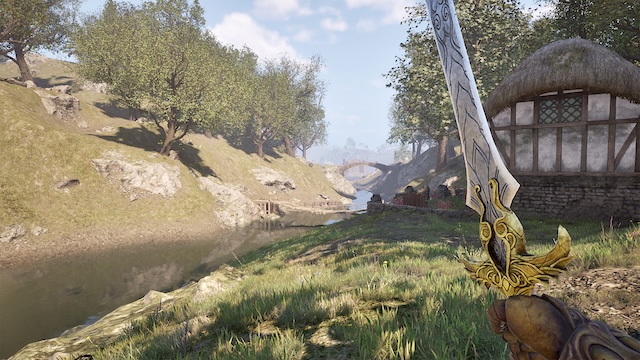 Let’s take physics as an example. They shouldn’t be too complicated, but they should always run for everything, and nobody cares if it creates jank on top of jank or doesn’t simulate particular real-life behaviors well. Use a certain type of collision for every object, but don’t get too specific: ultimately, there isn’t that much of a difference between a flower and a bee, except that bees have their own AI and don’t just move according to the will of other systems. All complexity is created not by the systems themselves, but by dozens of them running at the same time. That’s where the positive friction occurs.
Never Restrict Player Agency
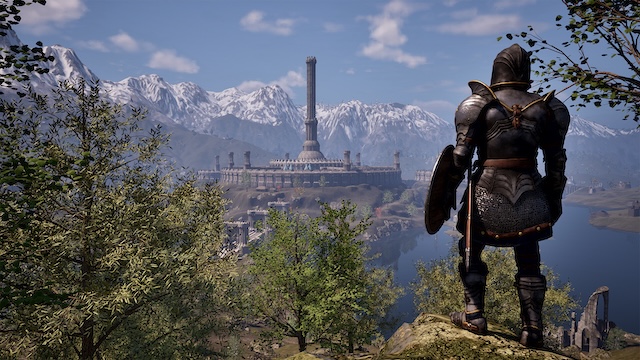 After minimum handholding early in the game, they let the player go. Completely, with no strings attached. This is scary for some designers and players, but for Bethesda and their audience, this is the point of freedom. It comes with costs: it’s impossible to control the pace, ensure that everything gets progressively more exciting and just better, so slogs are unavoidable, especially when it’s a massive open world. But in Bethesda, they know something important: the experience average doesn’t matter as long as the standout moments happen often enough. And the probability is just too high in their games, so the Peak-End Rule and the Rule of Contrast take action.
Provoke Emergent Gameplay
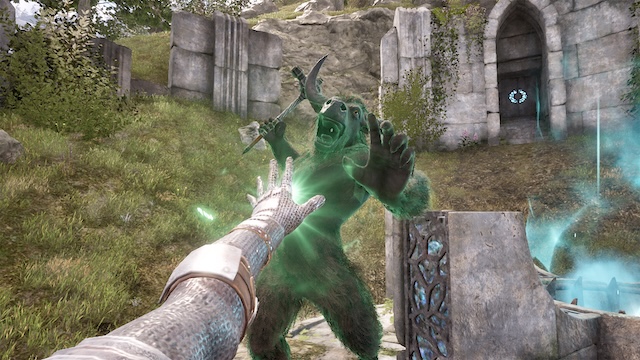 Emergent gameplay occurs when two previous principles collide. No design, programming and QA expertise in the world can account for all situations, and that’s the point. An epic, serious fantasy tale told with absolute moment-to-moment absurdity in the background is not just a contrast, it’s almost gaming’s Pratfall effect. I can forgive an overly ambitious game for falling flat. It’s harder to forgive a game that doesn’t even try hard the technical imperfections so common these days because of how complicated most productions are.
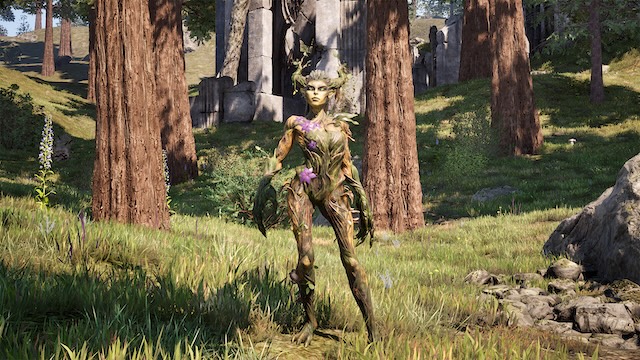
So bugs aren’t enemies. They can be friends. Chaotic friends.


