Fact Sheet
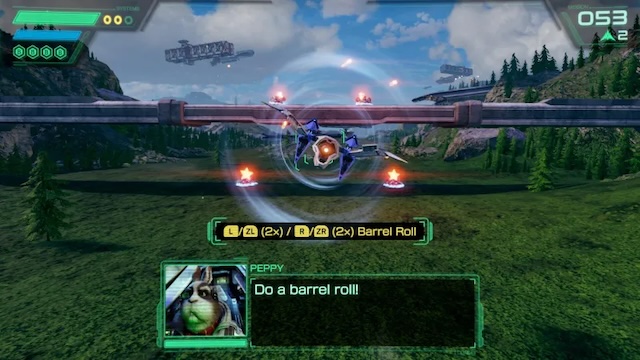
There’s a tutorial in Star Fox. It feels like an obligation: press this button to do this, pick up that item for this to happen. And do a barrel roll, of course. How much this tutorial actually teaches me to play the game is a different question. That’s not to say the approach is necessarily bad, it’s just that I can train all I want, but what matters at first in a game like this is showing up and gaining match experience.
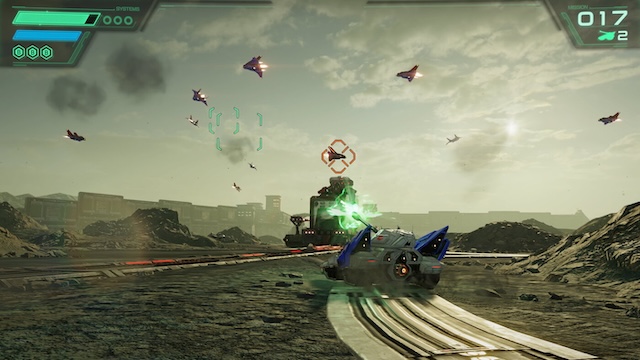
Similarly to how it’d be in a real conflict, Star Fox doesn’t give me time to warm up. I must perform right away: figure out when to shoot with free aim and when to lock on, what to save up bombs for, how to identify enemy behavior patterns and whether I’m actually dealing damage, because at this fidelity, blinking polygons and clearer hit feedback are prohibited. The campaign is so brief in the purest arcade sense that it’s easy to consider the first walkthrough to be the tutorial, but it’s once I select the second main menu option that I feel like I’m now being taught.
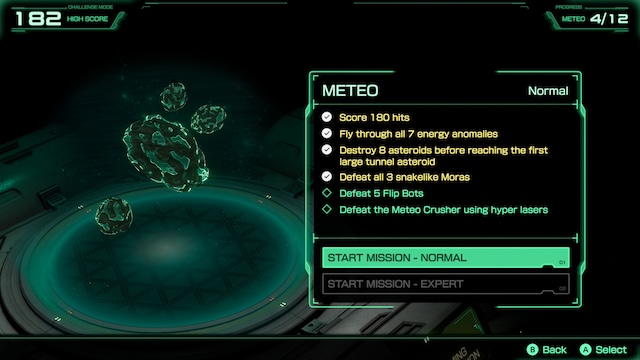
The new Challenges are deceptively simple. They give me a blueprint of how to experience each level, but they never tell me how to excel. This is the amount of points I can get, this is the curiosity I should investigate, and then, how do I actually shoot all these robots when the fly-over is so short? And thanks to the expert layer of Challenges locked behind this progression, I’m never overwhelmed and study every level gradually before I can attempt more ambitious campaign runs.
Thankfully, it’s never the Hitman situation when I scroll through the in-game list of all the ways to perform an assassination before realizing I’ve just spoiled discovering these by myself. There’s enough ambiguity in Challenges that I still need to play around and see what works. In other words, go through the actual process of learning.


