Fact Sheet
- Original Title
- リズム天国 ミラクルスターズ
- (Rizumu Tengoku Mirakurusutāzu)
- Alternative Title
- Rhythm Paradise Groove
- Genres
- Music
- Rhythm Game
- Release Date
- July 2, 2026
- Length
- HowLongToBeat: 5.5-11.5 hours
- Reviews
- Eurogamer: 4/5
- GameSpot: 8/10
- OpenCritic: 83/100
- Creators
- Developer: Nintendo / Tsunku
- Publisher: Nintendo
- Platforms
- Switch: Digital / Physical
Video games are hard. Not only to develop but to play as well! They require exceptional eye-hand coordination, sound logic, reasonable ability to navigate, mountains of patience, and most of all, putting in time and effort. This is how some of them become more of a temporary side gig rather than pure entertainment, even something as bright, colorful and cheerful as the newest Rhythm Heaven entry, Groove.
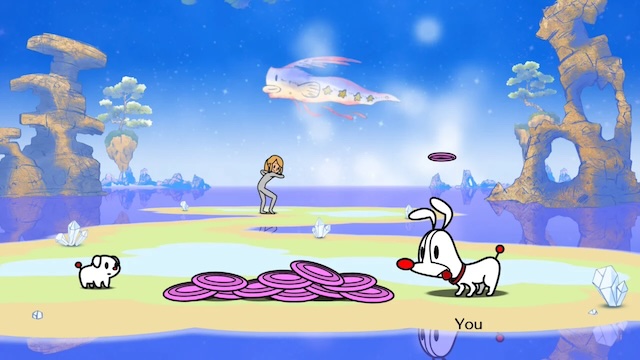
These games only appear breezy. Rhythm Heaven can be delightfully or dreadfully hard, depending on where I stand in the whole difficulty debate in the moment, if I stand at all. There’s nothing special in clearing the whole affair: some challenges will naturally require more effort than others depending in what ways I’m rhythmically inclined (catching frisbees and jumping the rope? easy! high-fiving or smashing cans? not so easy!). Getting not just passable scores but medals and perfects is where the game leaves me ecstatic and mad.
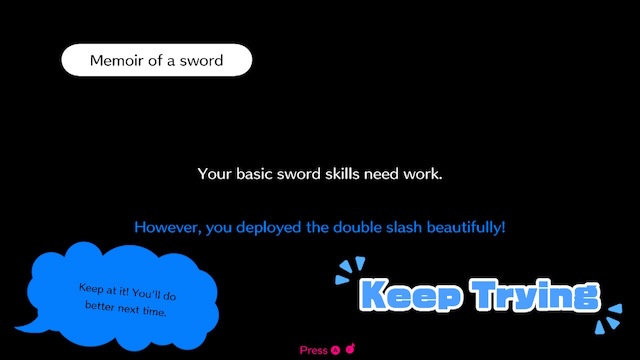
One particular point that Rhythm Heaven historically gets right makes the spikes easier. It praises me. And it’s not empty praise. It only throws it at me when I deserve it. When I pass a part of the tutorial, the game doesn’t go beyond a neutral “OK”. And if I fail a stage, it tells me straight away what’s wrong. But if I fail and show some promise, the tone is more of: “Your base clapping needs work, but double-clapping? You’re nailing it! Keep trying!”. This is a far cry from cheap praise tutorials from other games throw at me before deceptively letting go of my hand. Regardless if two or thirty tries later, when I make visible progress or pass it, the praise becomes reinforcement: “I can always get good enough eventually”.
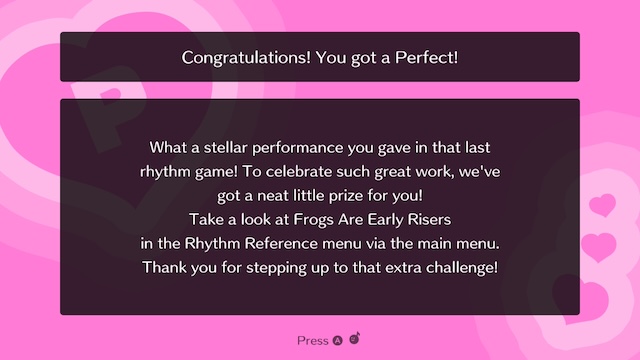
Be kind to players, will you?


